Refugee Kids Education Program

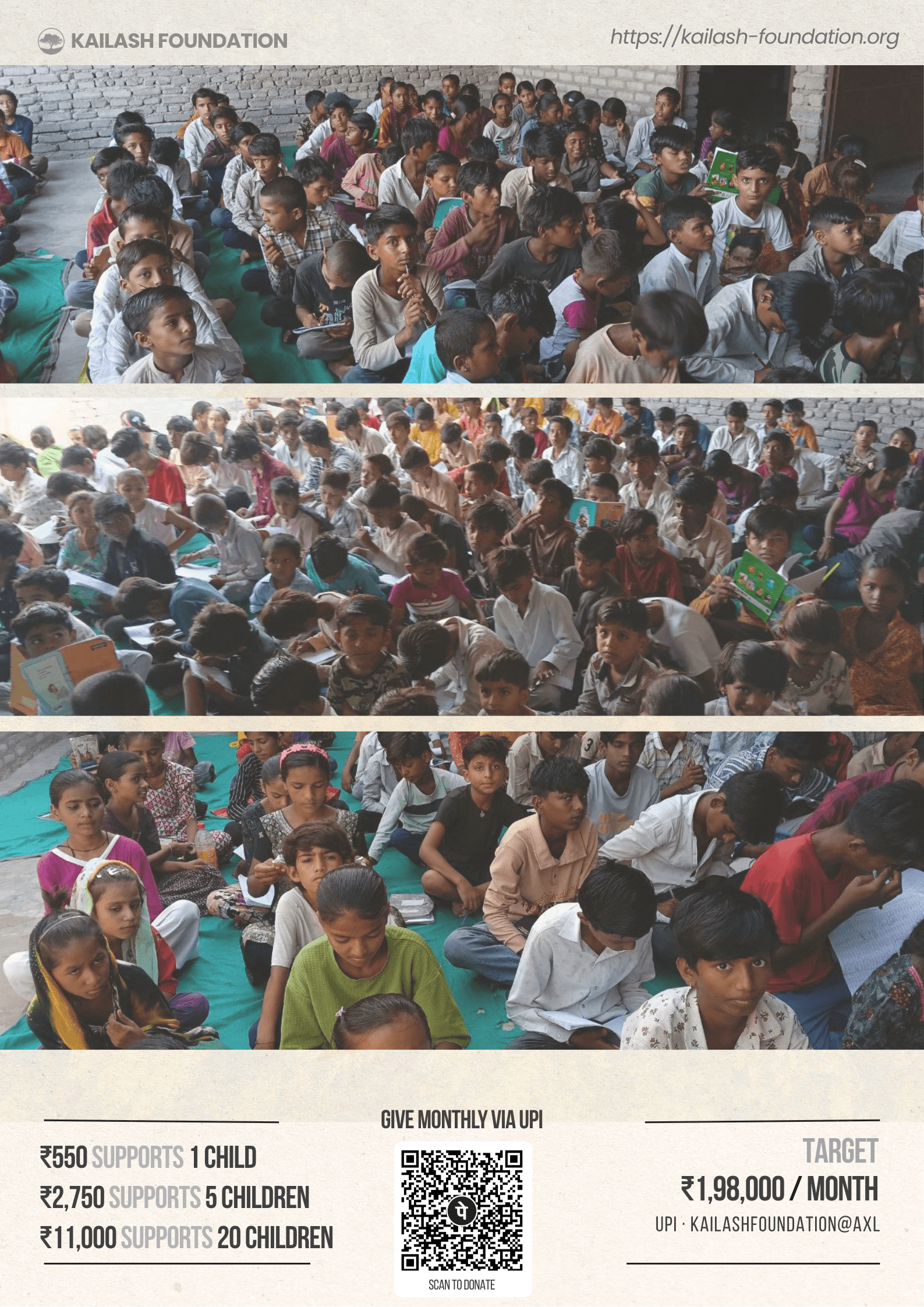
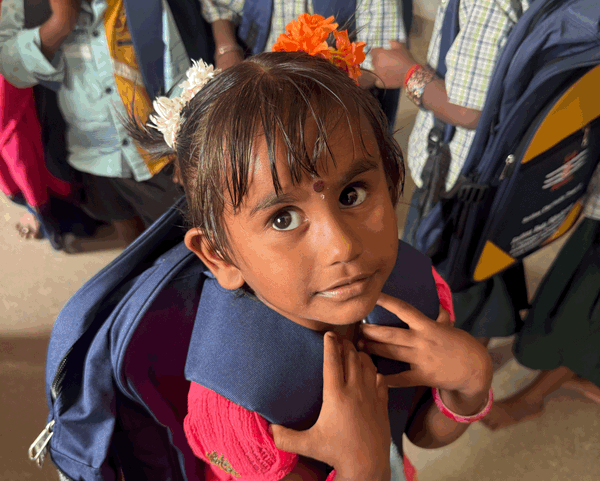
At an age when children should only worry about playtime, these kids had to flee for their lives. These kids are Hindu refugees from Pakistan. Back home, their families faced brutal religious persecution, forced conversions, and generations of trapped bonded labor.
The Ground Reality in Rajasthan
Most of these refugees arrive with nothing and belong to extremely impoverished backgrounds. They establish makeshift settlements on the arid outskirts of Jodhpur and Jaisalmer. Because they lack Indian citizenship upon arrival, they live in a harsh state of limbo:
- No Basic Amenities: Families live in shanties or thatched huts, and settlements often go years without paved roads, electricity, or a reliable water supply.
- Invisible to the System: Without citizenship documents, adults cannot easily secure formal employment, access government welfare schemes, or open bank accounts, forcing them into daily wage labor.
The Education Crisis for Refugee Children
While the Right to Education exists in India, refugee children face massive hurdles in accessing mainstream schools:
- The Language Barrier: In Pakistan, these children learned to read and write in Urdu or Sindhi scripts. Upon arriving in India, they have to learn Hindi and English entirely from scratch, putting them years behind their peers.
- Documentation Blockades: While some local government schools admit a few of these children based on passport verification, many families lack complete paperwork, leaving their children officially out of the system.
- Alienation: The cultural transition is jarring. Refugee children often face bullying or isolation due to their nationality and background, which discourages them from attending formal schools outside their settlements.
How Makeshift Schools Bridge the Gap
To prevent a lost generation, organizations like The Kailash Foundation help fund makeshift study centers directly inside the refugee camps.
The ₹550 per month mentioned in the appeal is a highly efficient micro-donation that typically covers:
- Basic Infrastructure: Maintaining a thatched hut, large tent, or simple room to serve as a classroom.
- Supplies & Tech: Mats to sit on, whiteboards, books, stationery, and occasionally a shared computer or internet dongle for digital learning.
- Educators: Paying a modest stipend to teachers—who are often educated youth from within the refugee community itself or dedicated local volunteers—to teach foundational Hindi, Math, and Science.
- Cultural Safety: Providing a secure environment where children can rebuild their confidence, learn self-defense, and openly celebrate festivals without fear.
These programs do more than just teach the alphabet; they are transition centers. By bridging the linguistic and cultural gaps, they prepare these children to eventually integrate into mainstream Indian schools once their citizenship is finalized.